Al-Hayat Al-Tayiba for Human Readiness in the Healthcare Sector
About This Event
A Cooperation Strategy between Itqan Center and The Center for Wellbeing
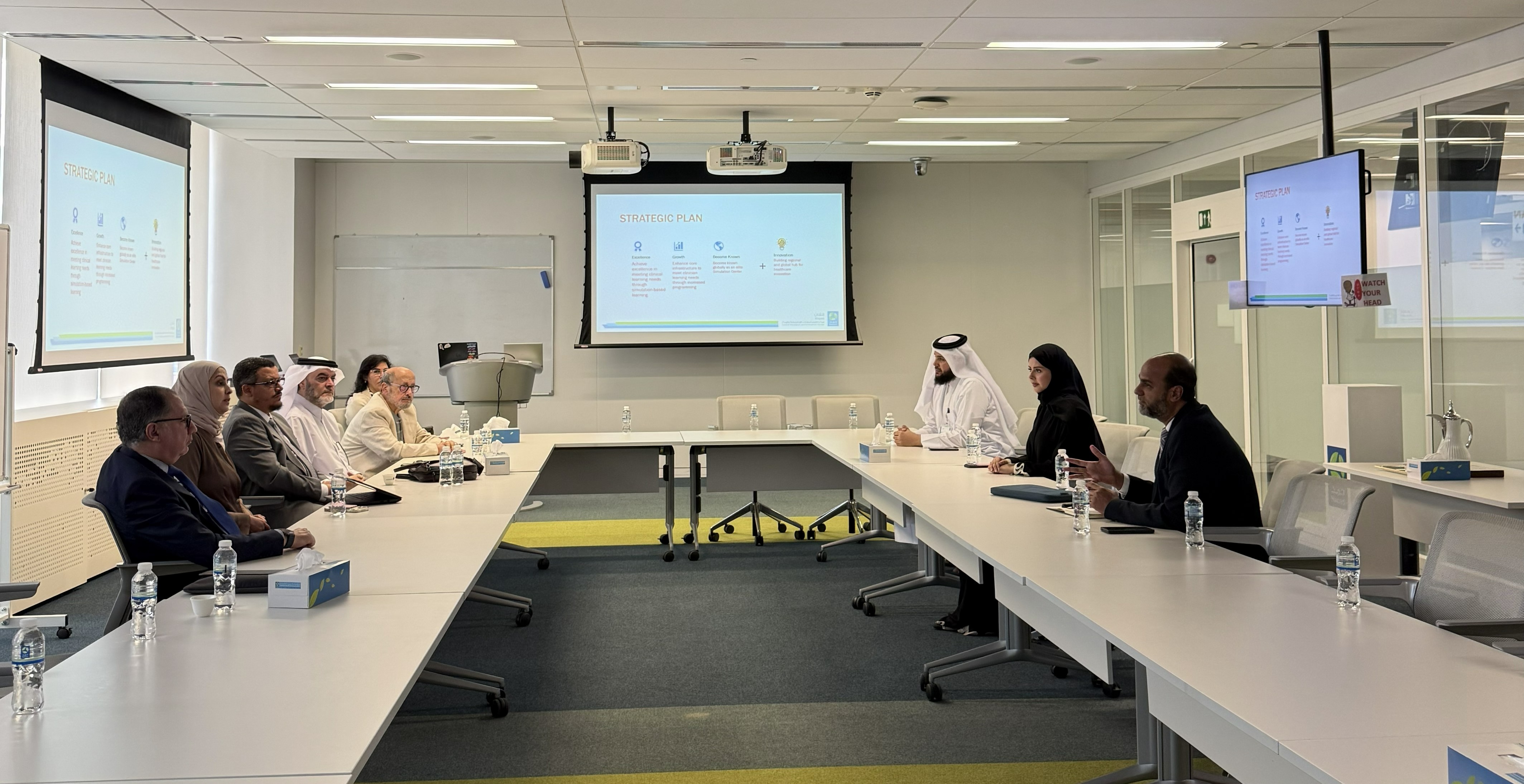
As part of ongoing efforts to build institutional partnerships that contribute to promoting wellbeing across different sectors, The Center for Wellbeing held a collaborative meeting with Itqan Center for Innovation and Medical Simulation, affiliated with Hamad Medical Corporation in Qatar, under the title “Al-Hayat Al-Tayiba for Human Readiness in the Healthcare Sector.”
The meeting was grounded in a shared commitment to advancing a holistic approach to healthcare, an approach that extends beyond the treatment of illness to address the human being across spiritual, emotional, intellectual, physical, and social dimensions. Such an approach seeks to strengthen psychological and human readiness while enriching the experience of both healthcare recipients and healthcare providers.
Al-Hayat Al-Tayiba for Human Readiness
The meeting began with an introduction to Al-Hayat Al-Tayiba Center, its vision and mission, and the foundations underpinning the concept of Al-Hayat Al-Tayiba as an integrated framework for achieving balance across the essential dimensions of human life. The framework is built around five interconnected pillars: spiritual, emotional, intellectual, physical, and social.
The Center views Al-Hayat Al-Tayiba as a comprehensive civilizational approach rooted in Islamic heritage while responding to the transformations facing people in the contemporary world. In this spirit, the Center brings together research, training, and consultancy, while developing evidence-based practices that strengthen the impact of initiatives and ensure their relevance to the needs of society.
The meeting also presented the development of the Al-Hayat Al-Tayiba Framework, which was informed by discussions involving more than 500 participants from different sectors. This process led to the development of a scale measuring the five pillars of wellbeing. The scale consists of 45 Likert-scale statements, providing an operational basis for understanding and measuring wellbeing, and for developing appropriate related practices.
Exploring Al-Hayat Al-Tayiba in the Healthcare Sector
The meeting highlighted Al-Hayat Al-Tayiba Center’s experience in collaborating with the Ministry of Public Health through four discussion sessions held over four days in February 2026. The sessions brought together 306 participants, including healthcare providers and recipients of healthcare services.
They explored how the Al-Hayat Al-Tayiba Framework could contribute to improving wellbeing, the challenges and opportunities associated with integrating its pillars into healthcare services, and recommendations for practical implementation.
The discussions revealed several challenges to achieving holistic care, including limited time available for medical consultations, shortages in certain healthcare personnel, cultural and linguistic barriers between providers and recipients of healthcare, differing perceptions of health, and limited integration among service providers.
Another important issue that emerged was the wellbeing of healthcare providers themselves. Those who care for others also need environments that support their own psychological, social, and emotional wellbeing.
The discussions further highlighted the continuing stigma associated with mental health, the need to build trust, limited holistic training among healthcare professionals, and the need to move beyond awareness and training toward mechanisms that ensure implementation, monitoring, and follow-up.
Recommendations for New Pathways of Development
Based on these findings, the meeting reviewed a number of recommendations that could provide a foundation for strengthening cooperation between healthcare institutions and The Center for Wellbeing.
Among the key recommendations were the adoption of a holistic health framework based on the pillars of Al-Hayat Al-Tayiba, and the implementation of a pilot model in a healthcare center, supported by mechanisms for ongoing monitoring and evaluation of its impact.
The recommendations also included integrating concepts of wellbeing into professional training and healthcare workforce preparation programmes; prioritizing the wellbeing of healthcare providers; incorporating psychological support into the care system; and training students in healthcare-related disciplines on the holistic Al-Hayat Al-Tayiba approach.
The recommendations further called for assessing workplace environments according to the holistic Al-Hayat Al-Tayiba approach, incorporating wellbeing concepts into early education, strengthening integration among the health, education, and community sectors, and launching awareness initiatives to help reduce the stigma associated with mental health.
Prospects for Cooperation and Joint Action
The two centers discussed several proposed areas of cooperation, foremost among them the integration of the Al-Hayat Al-Tayiba concept into the healthcare sector, and expanding the role of psychological wellbeing within healthcare training and practice, particularly in light of the growing need for mental health services and the importance of strengthening the readiness of healthcare professionals.
Towards the conclusion of the meeting, the discussions moved toward practical pathways through which this cooperation could be translated into tangible programmes and initiatives.
These included preparing to train physicians at Hamad Medical Corporation on the concept of Al-Hayat Al-Tayiba, training healthcare practitioners in group therapy techniques using the available simulation facilities, and exploring the potential for family therapy through dedicated training rooms.
Proposed areas of cooperation also included research activities, examining the effectiveness of training, its tools and methodologies, as well as participation in conferences and seminars and the exchange of expertise and knowledge.
This collaboration views Al-Hayat Al-Tayiba as a framework that can deepen the human dimension of healthcare. Holistic care begins with understanding the human being as a whole. Likewise, the readiness of the healthcare sector cannot be achieved through professional and technical preparedness alone; it also requires individuals who are capable of resiliency, empathy, communication, sound decision-making, and maintaining their own wellbeing and that of those around them.
The meeting between Al-Hayat Al-Tayiba Center and Itqan Center opens the door to a partnership that brings together knowledge, training, research, and practice, contributing to the development of more holistic models of healthcare, and a healthcare sector that is more prepared, more balanced, and better equipped to foster Al-Hayat Al-Tayiba for individuals and society.
August 24, 2026
Itqan Center