Beyond Skills: How Is Human Readiness Built in the Security Sector?
About This Event
Readiness for security work goes beyond professional skills. It is also shaped by an individual’s ability to navigate the pressures and challenges of fieldwork. Behind the decisions made in the field and the situations that demand a high degree of responsibility stands the individual: their values, psychological wellbeing, leadership capabilities, and ability to respond to the demands of the job.
This raises a different question about security training: How can individuals be prepared for the field not only in terms of professional skills, but also psychologically, spiritually, and through values?
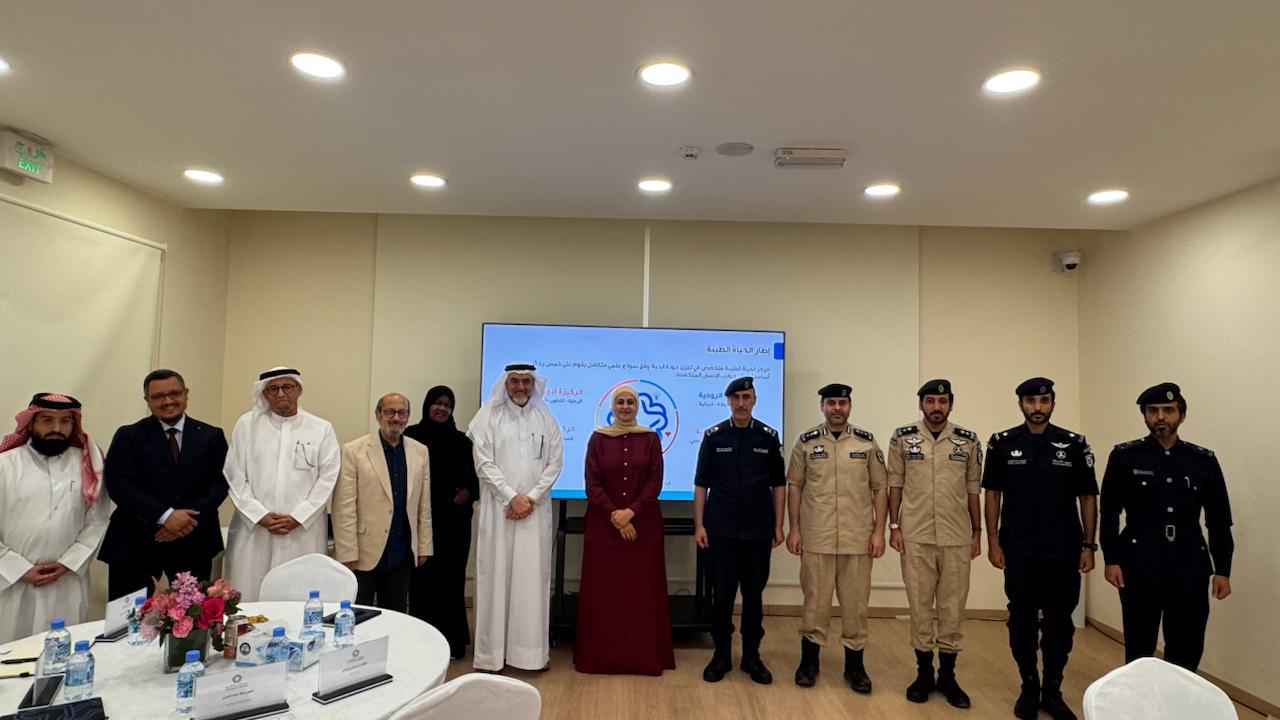
In this context, two coordination meetings brought together The Center for Wellbeing and representatives from various sectors of Qatar’s Ministry of Interior (MOI) to explore opportunities for collaboration and the development of a more integrated approach to training. The discussions considered the application of the Al-Hayat Al-Tayiba approach in developing training and research programmes, alongside the development of tools capable of measuring the impact of these programmes.
What Does Readiness Mean Beyond Skills?
The discussions explored professional readiness as something that extends beyond the acquisition of skills to include the spiritual, emotional, intellectual, social, and physical dimensions of the individual.
The meetings therefore addressed a broad range of areas, including values development, family, leadership, psychological and behavioural wellbeing, prevention, as well as leadership and trainer development. These areas open up a broader discussion about the relationship between institutional effectiveness and the wellbeing of the people working within an institution.
From this perspective, training is measured not only by what participants know at the end of a programme, but also by its lasting impact on their behaviour, performance, and ability to respond to the demands of their work. The discussions therefore highlighted the need to develop modern tools for measuring performance and impact, as well as tailored assessment scales that address the specific needs of the Ministry’s various sectors.
How Can Values and the Wellbeing Pillars Become Part of Training?
Another challenge lies not in recognising the importance of these dimensions, but in determining how they can be translated into practical programmes.
Participants emphasised the importance of developing clear methodologies for integrating the five wellbeing pillars into training programmes, while drawing on international experiences and practices in ways that complement Islamic heritage and Qatari culture.
This moves the concept of Al-Hayat Al-Tayiba from a broad concept to a practical question: How can the five wellbeing pillars be translated into training that can be designed and implemented, and whose impact can then be measured?
In this context, a number of programmes and initiatives were proposed, including leadership development, the design of healthy workplace frameworks, strengthening psychological and spiritual dimensions in fieldwork, and measuring the long-term impact of programmes. Training of Trainers (TOT) programmes were also proposed to support the integration of the Al-Hayat Al-Tayiba approach into existing training programmes.
From Concept to Practice
Her Excellency Sheikha Dr. Hessa bint Hamad bin Khalifa Al Thani, Chairperson of The Center for Wellbeing, outlined three main areas of cooperation with the Ministry of Interior:
Developing training programmes aligned with the Ministry’s strategies and institutional values.
Designing specialised programmes that respond to the needs of its various sectors.
Conducting joint research and studies in relevant fields.
Representatives from several Ministry sectors participated in the discussions, including the Police Academy, Community Police Department, Police Officers Institute, and the Internal Security Force (Lekhwiya).
Moving from ideas to practice, however, requires an understanding of the actual needs of each sector. The meetings therefore concluded by emphasising continued coordination to identify training priorities and needs, develop impact measurement tools, support research and studies, and strengthen knowledge exchange. The discussions also called for establishing a communication and coordination team responsible for following up on areas of cooperation and translating proposals into practical programmes and initiatives.
At the heart of these discussions, the question of human readiness remains: When the nature of security work is so closely connected to people, society, pressure, and responsibility, are professional skills alone enough to build readiness, or does genuine readiness also begin with developing the individual who puts those skills into practice?
August 19, 2026
The Center for Wellbeing